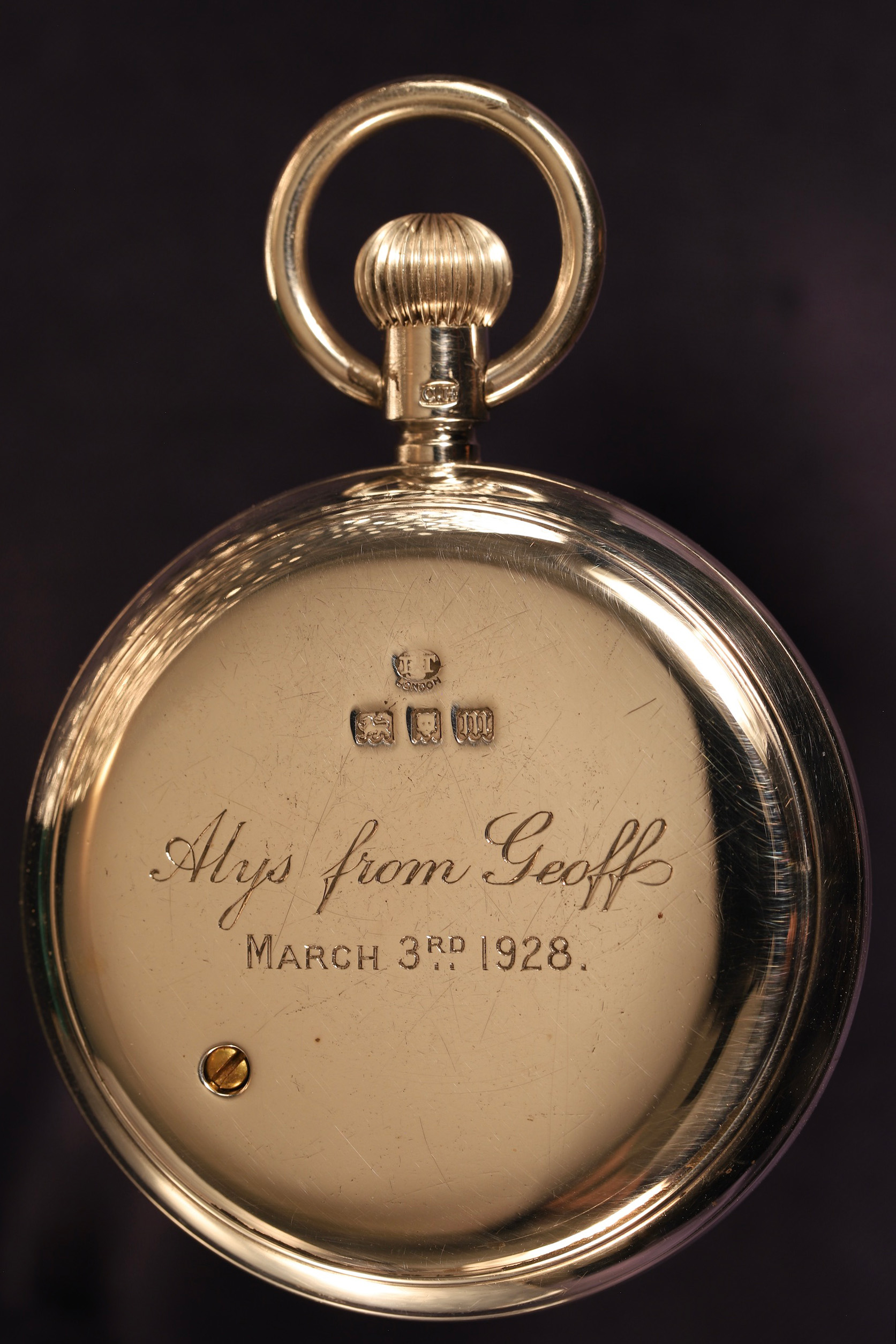

Provenance: ‘Alys from Geoff, March 3rd 1928’ — An Investigation
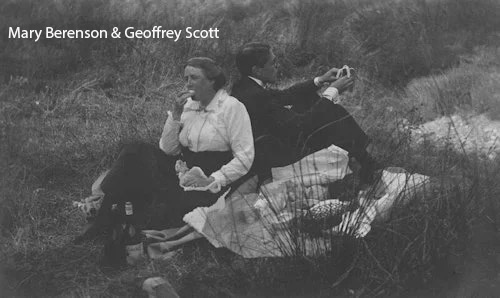
Although our research continues, our investigations strongly suggest that this silver pocket barometer was a gift from Geoffrey Scott (1884–1929) — English poet, historian of architecture and author of “The Architecture of Humanism,” close friend of Edith Wharton, and a central figure in the Bernard Berenson circle in Florence — to Alys Pearsall Smith (1867–1951), American-born Quaker relief organiser, women’s rights activist, and first wife of the philosopher Bertrand Russell.
The connections between Scott and Alys are well documented and multiple. Alys’s sister Mary had married Bernard Berenson, and Scott had been admitted to the Berenson circle in Florence while still an undergraduate at Oxford, subsequently spending years at the Villa I Tatti. The two families were closely interwoven — Scott’s correspondence with members of the Pearsall Smith family is confirmed in the Smith family papers held at Indiana University.
The Berensons practiced an open marriage. Monty Don, in his BBC programme “Monty Don’s Italian Gardens”, part 2 when he visited I Tatti, states that there was an affair between Mary and Scott going on. This is not confirmed but it was well known that Mary was fond of Scott and wanted to keep him near her.
Scott returned to England in 1925 following the breakdown of his marriage to Lady Sybil Cutting, and was resident there at the time the barometer was hallmarked and inscribed.
The timing of the gift is precise and resonant. The barometer was hallmarked London 1927 and inscribed Alys from Geoff, March 3rd 1928 — a period in which both Scott and Alys were deeply engaged with events in Italy. Alys had founded and chaired the Italian Refugees’ Relief Committee in 1927, assisting those fleeing Mussolini’s fascist government; Scott’s years in Florence gave him an intimate connection to the same Italy and many of the same people. The shared concern would have been a powerful bond between them in precisely this period.
Scott died of pneumonia in New York in August 1929 — just eighteen months after this barometer was given. The gift therefore falls very close to the end of his life, adding a further dimension to its significance.
The most promising avenues for definitive confirmation of this attribution are the Smith family papers at Indiana University, and the Russell Archives at McMaster University, both of which hold correspondence from the relevant period. We would welcome any information from researchers or institutions that might further corroborate or refine this provenance.